
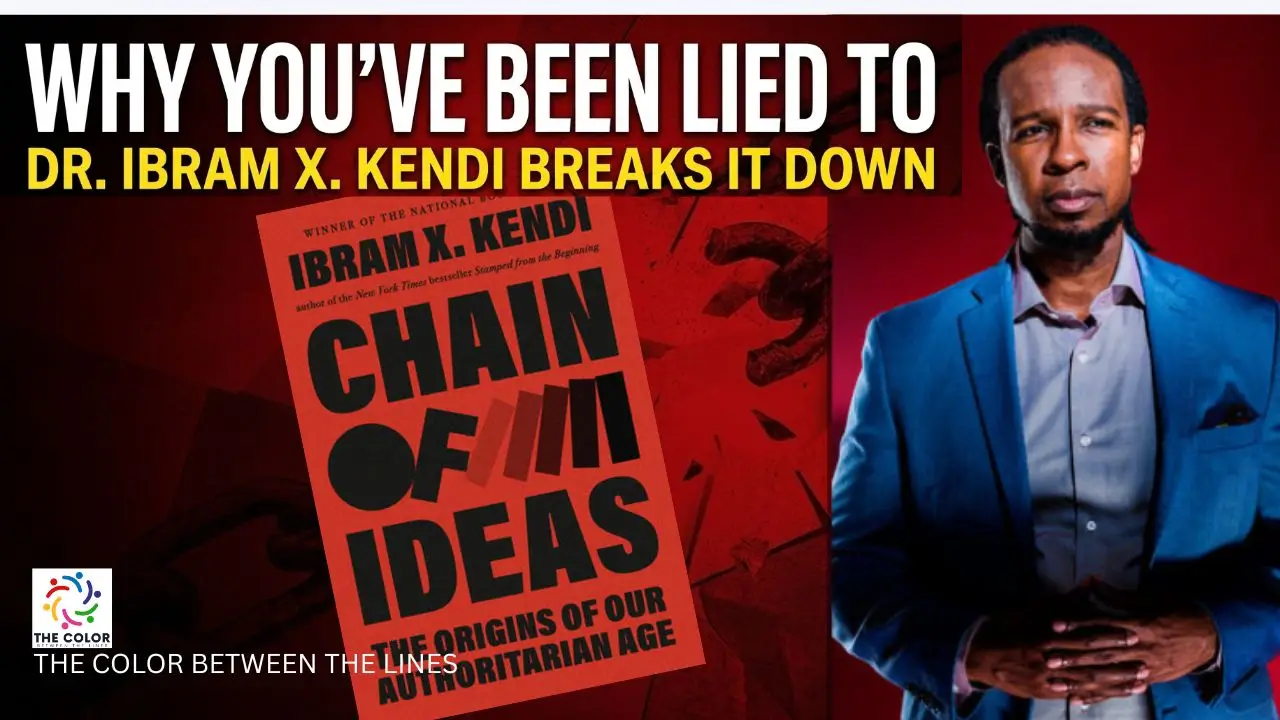
What Dr. IIbram Kendi’s Chain of Ideas Is Really About
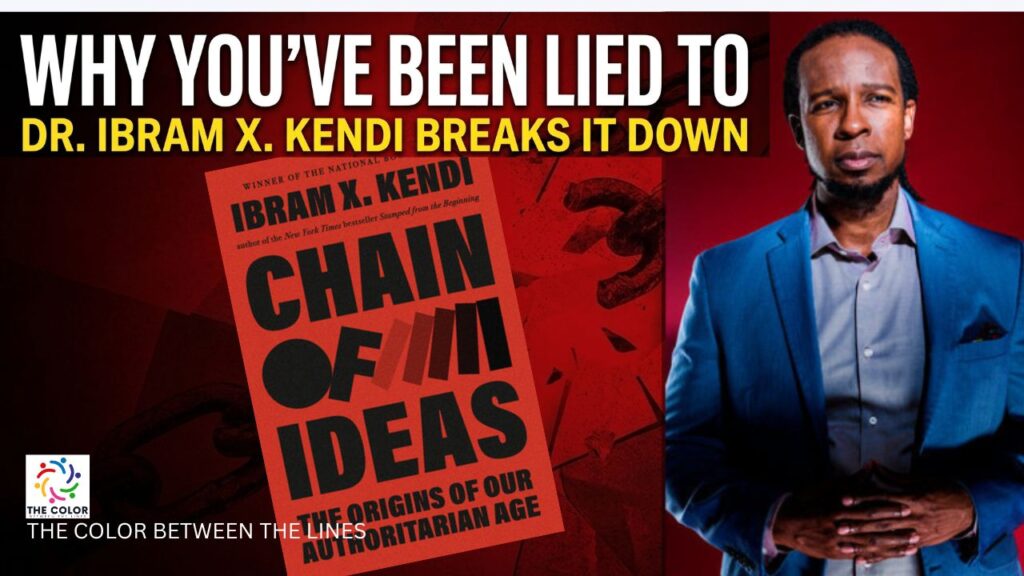
I want to tell you something about what it takes to sit across from someone whose work you deeply respect and ask them to open up a conversation that most people would rather avoid. Before I sat down to interview Ibram Kendi about Chain of Ideas: The Origins of Our Authoritarian Age, I did what any journalist does.
I researched. I had watched him in interviews with other journalists. I knew he was a rigorously researched, passionate, and deeply thoughtful historian. I knew he was the kind of academic who could hold a complex argument across hundreds of pages without losing the thread. I knew he had earned every credential attached to his name.
I also knew, from watching him speak, that he was not the kind of person who uses those credentials as a weapon. He was humble. Curious. Genuinely interested in the people he was talking to. Someone who treated a conversation like an opportunity rather than a performance.
So when I hit record, the nerves I felt were not about who he was.
They were about who I wanted to be in that room for my audience.
Not All Share The Same Point of View
I am conscious, always, that the people who watch and listen to The Color Between the Lines do not all share the same point of view. That is not a problem. That is the point. I want this space to be somewhere that a person who disagrees with me can still sit down, follow an argument, and walk away thinking. Not converted necessarily. Just thinking.
That is a delicate thing to hold in the room when the topic is as charged as this one. And I wanted to get it right.
What the Research Told Me
Dr. IIbram Kendi’s Chain of Ideas: The Origins of Our Authoritarian Age is his newest work. And it traces the rise of what he calls great replacement theory.
It traces the rise of what he calls Great Replacement Theory — the political argument that powerful elites are deliberately using Black and Brown people, immigrants, and minorities to displace white majorities.
If you have been paying attention to the news over the last several years — the redistricting battles, the rollback of diversity programs, the surge of nationalist politics across the globe — this book offers a lens that makes all of it suddenly, uncomfortably coherent.
What I found in my research before the interview is that Kendi does not approach this subject as a prosecutor. He approaches it as a historian. He follows the evidence. He goes into the archives. He traces this argument from Reconstruction through Jim Crow, through the streets of Charlottesville, through the mass shootings in Buffalo and Charleston, through the halls of governments on six continents.
He is not trying to make you angry. He is trying to help you understand.
That distinction matters enormously for how you walk into a conversation.
The Conversation with Dr. Ibram Kendi was hopful
When we finally connected — and I should mention my camera connection failed, which meant I had to pivot quickly into audio-only mode and trust that his side looked good enough for both of us — what happened confirmed everything I had seen in my research.
Dr. Kendi went with it. No complaint. No visible frustration. He simply kept talking, clear and generous and focused on what he had come to say. That kind of grace under imperfect circumstances tells you something about a person that no interview profile ever quite captures.
And what he said was extraordinary.
He talked about the zero-sum con — the manufactured belief that Black progress comes at white expense — and traced exactly who built it, who funds it, and why it has always served the interests of the people telling it rather than the people hearing it. He explained how Black politicians after the Civil War built public schools that educated poor white Southerners who had never had access to free education under the enslaver class that had controlled their lives. And then showed how those same enslavers turned around and told poor white people that those Black politicians were their enemy.
| “This is a way to con people into submitting to their own domination … making them believe that Black people are their political opponents, when actually we’re allies.” |
That is not a radical statement. That is a historical one. And the difference matters.
Not a Lecture. A Conversation.
What stayed with me after the interview ended was not any single quote. It was the feeling of the whole thing.
Dr. Kendi was not preaching to the choir. He was extending a hand to people who might not yet be in the room — saying, look at the evidence, follow the history, see if it doesn’t lead you somewhere you weren’t expecting. He was not asking anyone to abandon who they are or what they believe. He was asking people to think carefully about who benefits when we spend our energy fighting each other instead of examining the systems that are actually shaping our lives.
That is a much harder thing to do than to simply argue with people who disagree with you. And it is exactly the kind of conversation I try to create space for on this platform.
I felt genuinely good when it was over. Not because it was easy. Because it was honest. And because I believe that somewhere — in a classroom, at a dinner table, in a quiet moment of someone’s morning commute — this conversation is going to open something up for someone who needed it opened.
That is why I do this work.
Dr. Ibram Kendi’s Chain of Ideas is available now wherever books are sold. I hope you will read it. I hope you will listen to the episode. And I hope you will share it with at least one person who might push back on it — because those are exactly the conversations worth having.
| FOR EDUCATORS — A Note Just for You |
| I wrote this blog with two teachers specifically in mind. The first is already ready to bring this conversation into the classroom and just needs the right framework to do it with confidence. The second is standing at the edge — wondering whether a topic this charged crosses a line. Whether using it invites criticism. Whether the discomfort is worth it. To that second teacher I want to say this: teaching students to examine evidence, follow an argument, and think critically about history is not crossing a line. It is the job. And students — especially high school and college students — are more than capable of handling complexity if we trust them enough to present it honestly. I have a free educator resource for this episode being developed. Discussion questions. A historical timeline. Curriculum connections for grades 6 through 12 and college classrooms. It is yours. → Watch the full episode on YouTube. → Listen on Alive Podcast Network, iHeart Radio, Apple Podcasts, Spotify |