
Why Documenting Family Stories Cannot Wait
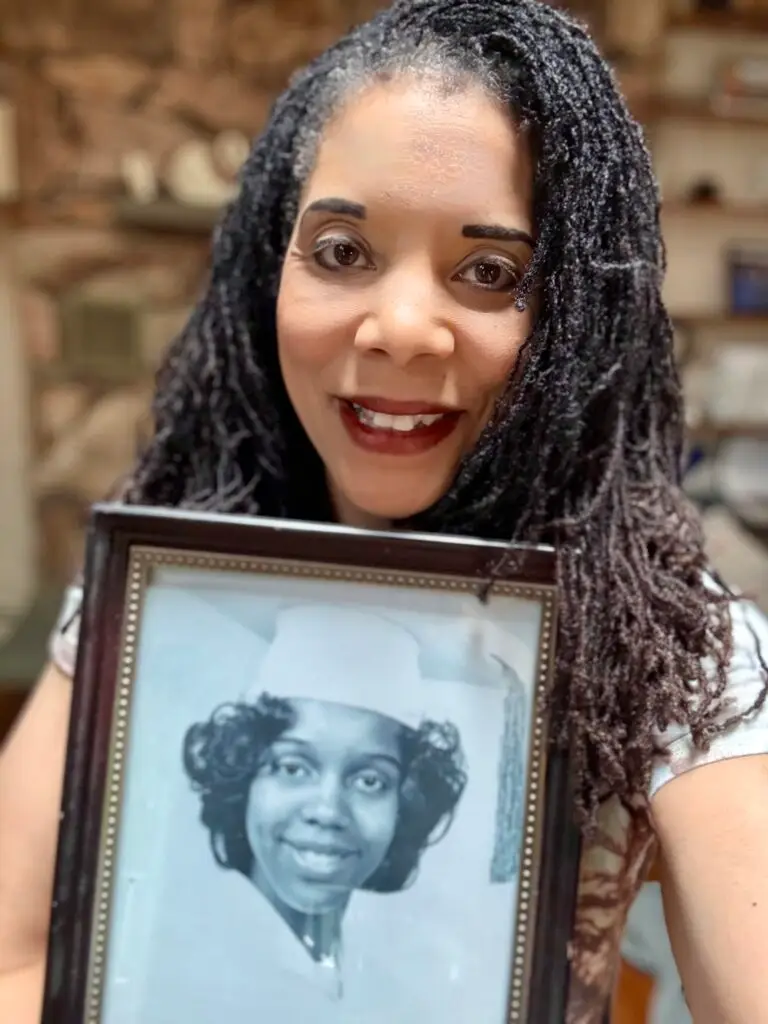
A few weeks ago I took a photo holding my mother’s picture. It was for a special my news team was producing — a reflection on the women of the Black Information Network and what Black Motherhood means to us. It was a professional assignment. But sitting there holding her photo, something personal hit me that I was not prepared for. I had never made a point of recording family stories — the voices, the memories, the moments that matter most. And now, with my mother and my father gone, I was facing the cost of that silence. I have no recording of my parents’ voices.
Not a voicemail. Not an audio clip. When she passed I produced a video tribute for her homegoing service. I remember the current pastor of the church was kind of skeptical about showing something like that during a church service. It raised a few eyebrows at the time because most funerals simply did not do that. I worked with a friend to pull together every piece of footage I could find. I found video of her praising during a church service — the only moving image I had of her — and I played it during the service. No audio recording of her voice existed anywhere that I could find. I remember my father wept after seeing it.
For years our church recorded every service on VHS. Every Sunday. Every song service and every sermon. Somewhere in those tapes was my mother’s voice. But by the time I went looking, every single one of them had been thrown away.
Gone. Just like that.
That is what happens when we do not preserve intentionally. Not through neglect or carelessness but simply because no one thinks about what those tapes — those voicemails, those videos, those Sunday afternoon phone calls — will mean twenty years from now.
The Episode That Almost Didn’t Happen
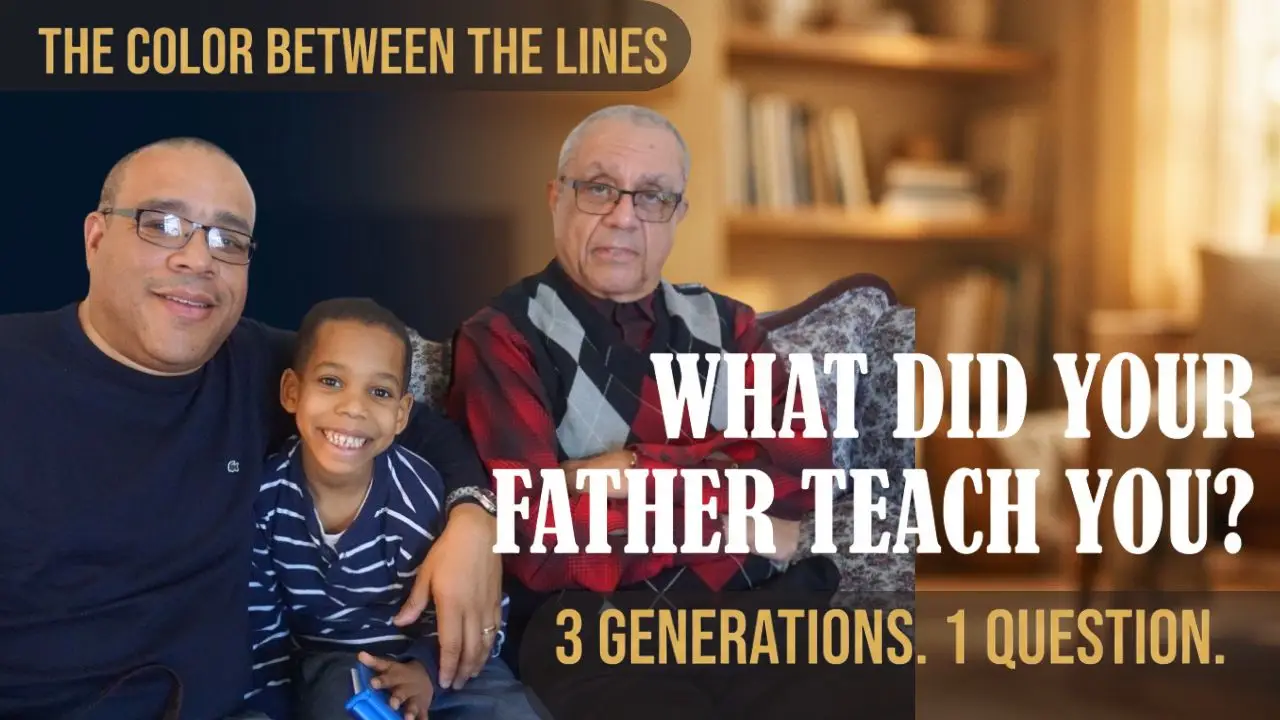
What Did Your Father Teach You? Three Generations of One Family Answer One Question started as a radio piece I produced for the Black Information Network years ago. It featured three generations of the Dillard family — my son Nicholas, my husband, and my late father-in-law Anthony Dillard — answering one simple question.
I did not plan to bring it to YouTube. I was not sure anyone would want to watch it.
▶ WATCH THE EPISODE —
Then I thought about how many people are losing loved ones earlier than they ever imagined. And how outside of a Facebook post or a handful of photographs, most of us have nothing to hold onto. No voice. No story told in their own words. Just memory — which is the most fragile archive there is. Recording family stories — even imperfectly, even just once — is the difference between having something and having nothing.
So I sat on my couch, pulled out the photo books I stopped making during the pandemic, and I talked about my father. Most knew him as Reverend Michael Miller….a pastor, Star Trek fan and man of faith who believed that education, hard work, and faith in God were the keys to everything. He passed from prostate cancer. And I have been carrying his voice in my memory ever since.
The Answer That Surprised Me
When I asked Anthony Dillard what his father taught him, I expected something about values. About hard work or faith or showing up for your family. And he gave me that. He talked about accepting all different kinds of people — a lesson his father modeled through how he moved through the world.
But it was the other thing he said that stayed with me.
He told us his father was a great dresser. And that he was not. That something about his father’s style — the sharpness of it, the confidence it projected — made him feel self-conscious about his own appearance in a way that followed him his entire life.
He was in his 80s when he said this.
Think about that. A man in his 80s still carrying something his father never said to him. Still measuring himself against a standard that was never spoken aloud, only observed. The words that were never said had as much power as the ones that were.
It reminded me of something I believe deeply as a parent and as a storyteller. The things we say to our children — and the things we never say — follow them further than we will ever know. Long past childhood. Long past the years when we think our words still carry weight. They carry it forever.
Why These Conversations Cannot Wait
I did something intentional in 2020. Before my father-in-law passed, I helped document a conversation with him. Three generations of one family on camera answering one question.
That decision is something I will never regret.
If your father is still here — please sit down with him and record something. It can be just the answer to one question or one story about his father, his childhood, or the lesson that shaped him most. Later, you will treasure it in ways you cannot imagine right now. And so will the generations that come after you.
Because family stories do not preserve themselves. Recording family stories is not a project for someday. It is a decision you make today or you may never make at all. They live in the people who carry them. And when those people are gone, the stories go with them unless someone decided to write them down or press record.
What This Week Reminded Me
I shared some personal things this week on social media including a photo of my father, my mother and my wedding day photo. Also images of the photo books I stopped making during the pandemic. Stories about loss and love and the things we carry long after the people who gave them to us are gone.
And the response told me something I already suspected.
We are not as different as we think we are. Recording family stories — the voices, the lessons, the moments that made us who we are — is one of the most human things we can do for the people who come after us.
Every one of us has someone we wish we could hear just one more time. Every one of us has a lesson we are still learning from someone who is no longer here to teach it. Sharing these stories — telling them out loud, pressing record, writing them down — is not just an act of memory. It is an act of connection. It is the thing that reminds us we are human and that our humanity is something we share.
Watch the Episode + Get the Free Resource
What Did Your Father Teach You? Three Generations of One Family Answer One Question is live now on The Color Between the Lines on YouTube.
And if you are an educator who wants to bring conversations about family, legacy, and oral history into your classroom — I will have a free resource waiting for you on Substack. Discussion questions, reflection prompts, and tools to help your students start having these conversations with the people in their own lives.
Because these conversations deserve to live beyond YouTube.
▶ GET THE FREE RESOURCE ON SUBSTACK — [INSERT SUBSTACK LINK]
Your story matters.
Esther Dillard is a multi-media journalist and two time Gracie Award winner.