
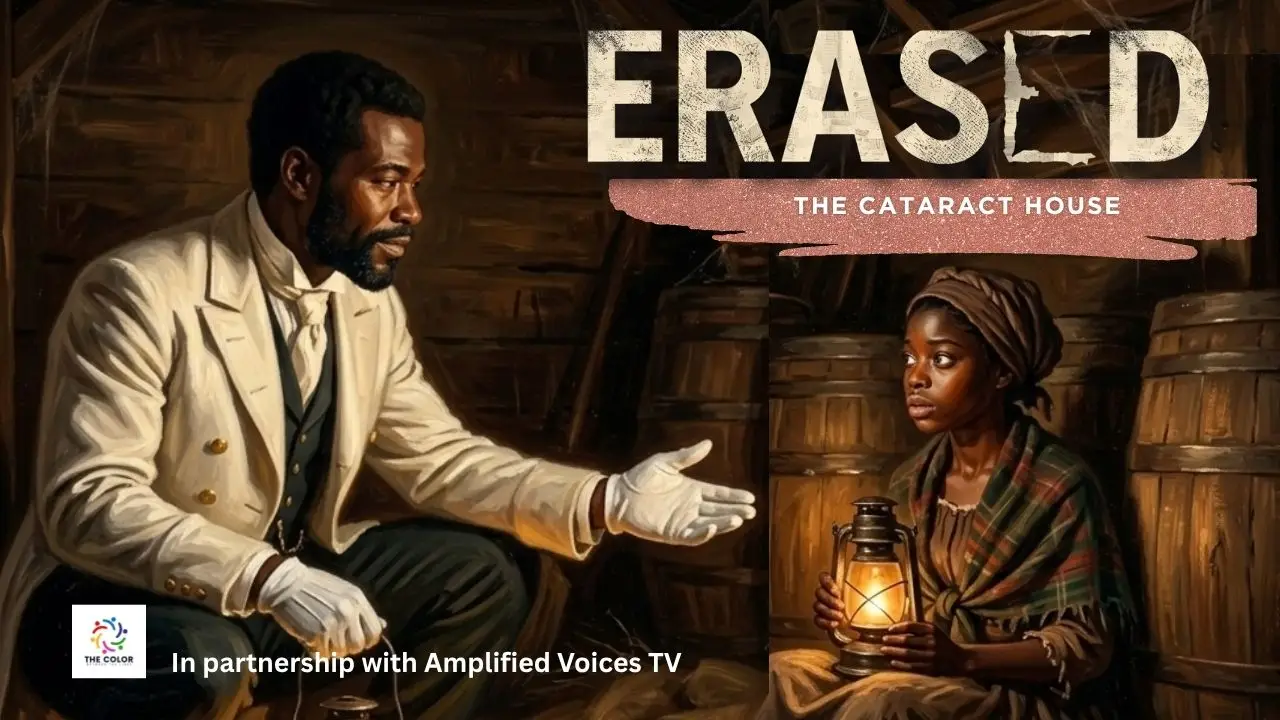
Why Journalism Could Not Tell the Cataract House Underground Railroad Story
By Esther Dillard | ERASED: The Untold American Story This piece explores the fascinating history of the Cataract House Underground Railroad.
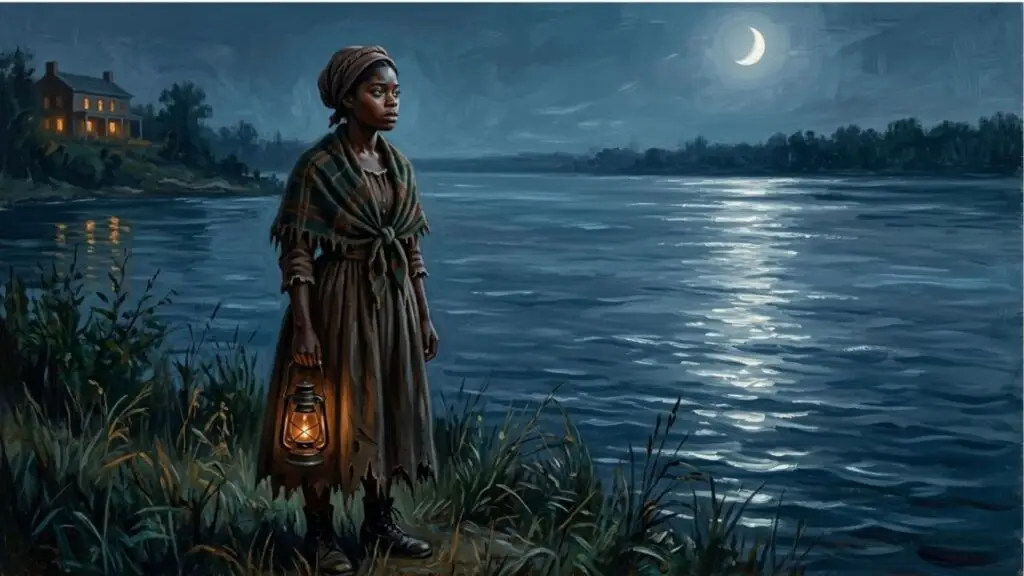
Painterly illustration of Hattie Grace standing at the Niagara River at night holding a lantern — ERASED The Cataract House”
The Sound of the Falls
The Cataract House Underground Railroad is a remarkable untold story in American history. I grew up thirty minutes from where it happened without ever knowing it existed. The story begins near Niagara Falls, where I once stood as an adult and felt the thunder of the water move through my entire body. I was working for WGRZ-TV at the time, which meant I did not have to pay the steep price tag for the Maid of the Mist. That’s the boat tour that takes you as close to the falls as any human being should probably go. Even with a rain poncho I was completely soaked. The roar was not just loud. It was physical. It moved through your entire body from the inside out. Even on a warm sunny day, the contrast of sunshine pouring through curtains of falling water created a sensory experience I will not soon forget. Standing on that boat I could not imagine anyone voluntarily going over those falls in a barrel. The power of that water is not something you fully understand until you are standing inside it.
What I did not know then — what I would not know for decades — was that just a few miles downstream from where I was standing, in 1841, a fourteen year old girl stood at the edge of Niagara River in the dark and trembled with fear. She could likely hear those falls and feel the current pulling in the distance. And she made the choice to get in the water anyway. Her name was not recorded by history, so I gave her one. I called her Hattie Grace.
A Story In My Own Backyard
I grew up in Buffalo, New York. Niagara Falls is thirty minutes away. My parents would take us on Saturday trips — sometimes on a whim. We often preferred the Canadian side because it was prettier, more picturesque, with better flower displays and better views. I later spent years working as a journalist in that region, at the Buffalo News and at WGRZ. I wrote feature stories. And I was always searching for something human that could anchor a piece and make readers stop and pay attention.
I never found the Cataract House. Not once in all those years of looking. And I have been thinking about why ever since I stumbled onto it this year while researching upcoming ERASED episodes.
Why Journalism Could Not Tell the Cataract House Underground Railroad Story
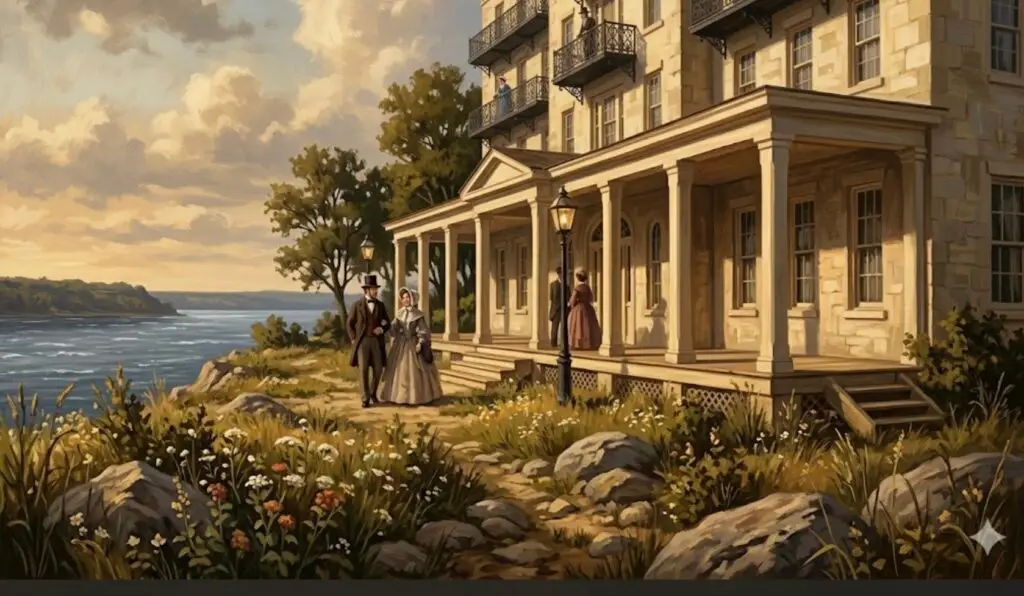
The honest answer is that the Cataract House Underground Railroad story does not fit the journalism format. While working as a feature news writer in print, I was taught you need an anchor, a source, someone who can sit across from you and speak extensively about what they know. You need quotes. You need documentation that goes beyond fragments.
The Cataract House story has fragments. Research gave me a name, John Morrison, head waiter. There was record of a letter written by an outraged slaveholder to a New Orleans newspaper in 1841. There was history of African American waiters who served presidents and kings by day and rowed freedom seekers to safety by night.
That is not nothing, but it is not a newspaper feature either. It needed living sources, extensive documentation, or someone to call for comment. So that is why I believe the story sat. It is documented but disconnected. It is present in the historical record but never assembled into something a general audience could hold onto. I do not think anyone deliberately suppressed or erased the story. I think it was simply waiting for someone who could work in a different form. There needed to be a way to take fragments and build something whole.
What ERASED Made Possible
I have been building ERASED: The Untold American Story for several months now. Each episode uncovers a person or place that history chose not to remember — or simply never packaged in a way that made it accessible to a general audience. Elizabeth Jennings Graham desegregated New York City transit 101 years before Rosa Parks. Robert Smalls commandeered a Confederate warship and became a United States Congressman. Harriet Tubman led a military raid that freed more than 700 people in a single night. Those stories had anchors — living descendants, documented records, interviews I could conduct and weave into a narrative.
The Cataract House story had John Morrison, a letter of complaint from a man who thought he owned another human being, and a girl whose name nobody wrote down. That was enough. ERASED gave me a format that journalism never could — the freedom to build a poetic narrative around a documented truth. I used imagination not to invent facts but to honor the spirit of people whose full story was never recorded. I wrote the Cataract House episode as a children’s story in the style of Dr. Seuss. Not because the history is not serious — it is deadly serious. But rhythm and rhyme and imagery can carry emotional truth in ways that a straightforward documentary cannot.
Although I am not a published poet, my hope was to create a narrative easy enough for a child to watch and feel what Hattie felt standing at that river. I wanted them to understand what it meant that those men in white jackets never flinched, never blinked, just smiled and pointed the slaveholder in the wrong direction all night. And I wanted John Morrison to finally get his flowers.
Remember His Name
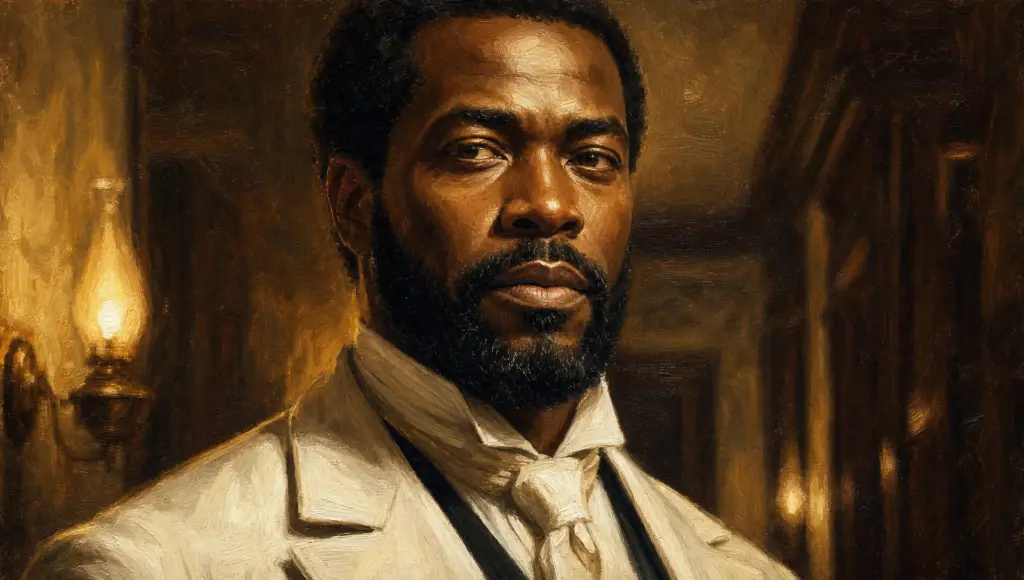
Head waiter John Morrison led one of the most organized Underground Railroad networks in American history. He and the men who served alongside him were strategic, coordinated, and completely invisible to the people they were outsmarting every single night, risking their jobs and their lives without ever taking credit, without ever telling, and history barely remembered their names as a result.
Abraham Lincoln stayed at the Cataract House. Andrew Jackson stayed there. Two Kings of England walked through those doors. And the men who served them were rowing freedom seekers across the Niagara River to Canada in the dark. Nobody knew and nobody could prove it, and that was exactly the point. In 1841 a fourteen year old girl escaped through the Cataract House with their help, and the man who enslaved her was so outraged that he wrote a letter to a New Orleans newspaper to complain and warned other slaveholders to stay away. The waiters kept their jobs, and she never went back.
How many people escaped through the Cataract House? No one knows for certain because the records were kept secret. Historians describe it as the busiest Underground Railroad station on the entire Niagara frontier, but no number survives because these men made sure no number would. That is not a gap in the historical record. That is a masterpiece of strategic silence.
What Juneteenth Is Really About
This episode drops before the week of Juneteenth 2026 because this is exactly the kind of story Juneteenth asks us to remember. Juneteenth is not just about the day the last enslaved people learned they were free — it is about the two and a half years between the Emancipation Proclamation and that announcement in Galveston, Texas. It’s also about all the days and years and decades before and after when freedom was not given but taken by many who ran for their lives.
Buffalo, New York — my hometown — is one of the oldest Juneteenth celebration cities in America, and the festival started in 1976 when a community decided that freedom was worth celebrating loudly and publicly every single year. I marched in that parade as a child with my church, and my uncle — a Korean War veteran — taught us to march in military formation with matching t-shirts. The fancy steppers with their elaborate routines made me jealous. But I understood even then that there was beauty in doing things differently, in showing up and moving together. I did not know then that I was celebrating the same freedom Hattie crossed a river for, but I knew it felt like something worth remembering. It still does.
Watch the Cataract House Underground Railroad Episode
ERASED: The Cataract House — Freedom’s Secret Hotel is streaming now on YouTube and wherever you get your podcasts.
To learn more about the Cataract House Underground Railroad history visit the Niagara Falls Underground Railroad Heritage Center at The Niagara Falls Underground Railroad Heritage Center — 825 Depot Avenue West, Niagara Falls, NY — niagarafallsundergroundrailroad.org
“They laughed and they danced and they never once knew what the Black men in white jackets were planning to do.” — ERASED: The Cataract House
Your story matters. — Esther Dillard