
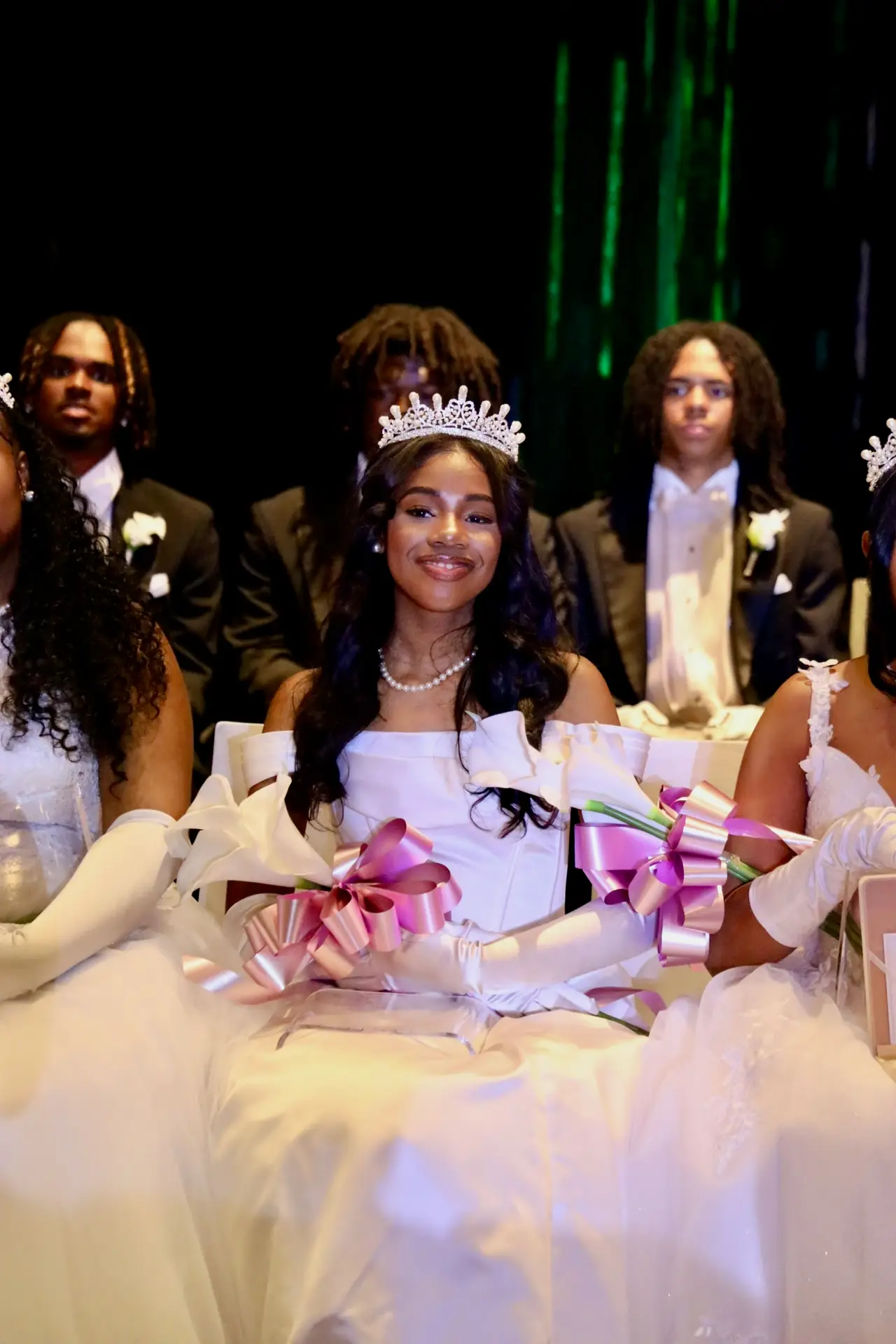
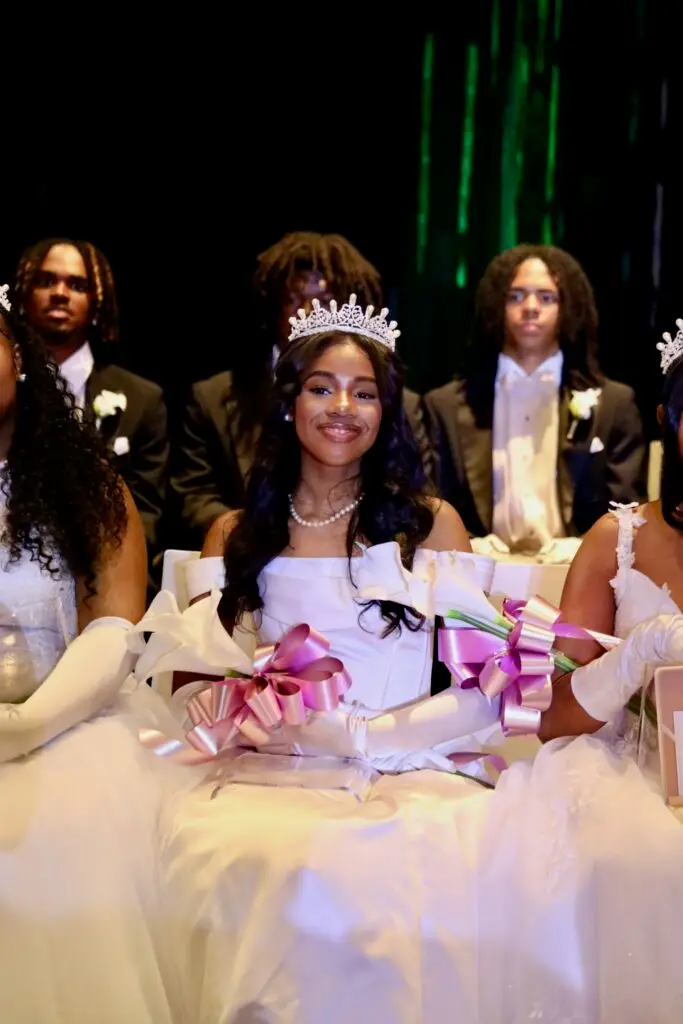
She is 18 years old. She is headed to Columbia University to study human rights. And she carries one of the most recognizable names in American history. But when I sat down to talk with Yolanda Renee King — the only granddaughter of Dr. Martin Luther King Jr. and Coretta Scott King — what moved me most was not the name. It was the person behind it.
What You Will Learn From This Conversation With Yolanda Renee King
In this episode of The Color Between the Lines, Yolanda Renee King opens up about what senior year really feels like when the world is watching. She breaks down what a Black cotillion actually is — and why its history goes back further than most people know. She shares what happened when she sat down to read her grandfather’s first book, Stride Toward Freedom, and found that it changed something in her that she was not expecting. And she speaks with remarkable clarity about what her generation — Generation Z — is being called to do right now.
This is not a celebrity interview. This is a primary source. A young woman’s testimony about what it means to inherit a legacy and decide, deliberately, what to do with it.
Senior Year, Transition, and the Bridge Between Childhood and Adulthood
When I asked Yolanda what senior year felt like, she paused and then gave me an answer I was not ready for.
“I feel like I’m walking over a bridge,” she said. “On one side it’s my childhood. On the other side it’s the next chapter I’m walking into. And there’s something almost beautiful about that.”
Most of us remember that bridge. The excitement of what is coming mixed with the quiet grief of leaving something behind. But Yolanda Renee King is crossing that bridge in 2026 — with more uncertainty, more pressure, and more eyes on her than most young people will ever experience.
She chose Columbia University not for the name recognition, but because she discovered something on a campus tour that she had not known existed — a human rights major. That detail tells you everything about who she is becoming, separate from who she was born to be.
Who Is Yolanda Renee King — Beyond the Legacy
One of the most important moments in our conversation came when I asked Yolanda how she introduces herself to people who do not already know her name.
“I usually just introduce myself as Yolanda,” she said.
Her parents raised her to understand that being related to Dr. Martin Luther King Jr. is something extraordinary — but it is not all of who she is. “Not even that is what makes you Yolanda,” they told her. She has carried that lesson into every room she walks into.
But she also made a point that landed hard. When her peers find out whose granddaughter she is, their reaction reveals something most of us do not want to admit — we have mentally placed the civil rights movement much further in the past than it actually was. Yolanda Renee King is a Gen Z teenager. Her grandfather led the Montgomery Bus Boycott. That is not ancient history. That is one family’s living memory.
She noted that It hasn’t even been a century yet since the civil rights movement. And she said most of us have a tendency to make it further away or older than it really is.
What Is a Black Cotillion — And Why Its History Matters
When most people hear the word cotillion, they picture formal dresses and rehearsed introductions. Yolanda Renee King had a different definition ready — and it is one every educator and parent should hear.
“The cotillion — the debutante ball — being a debutante — is our coming-of-age, coming into womanhood moment,” she said. “And I think that is so, so important.”
She is right. And the history behind that tradition is one of the most undertold stories in American cultural life.
The first Black debutante ball recorded in an American newspaper took place in New York City in 1778 — more than 100 years before the Civil War ended. They were called Ethiopian Balls, and they were hosted by free Black men and their families. By 1895, New Orleans — home to one of the largest free Black populations in the country — held what historians recognize as the first formal African American debutante ball.
Here is what is critical to understand: these were never imitations of white society. According to researchers at the California African American Museum, where white cotillions were often about matchmaking, Black cotillions were always about education, scholarship, and uplift.
Yolanda was presented at the Ivy Community Foundation Pink Cultured Pearls Cotillion on March 29, 2026, in Atlanta — and what she described about the experience was not the gown or the crown. It was the Sunday afternoon practices. The community of young Black women she found. The space of Black girl empowerment she did not know she needed until she was inside it.
“I didn’t even realize how much I needed it until I joined,” she said. “Having that space of Black girl empowerment and Black girl magic — it will forever stay with me.”
Alpha Kappa Alpha and the Scholarship Tradition Behind Black Debutante Culture
The connection between Black cotillions and education is not coincidental. It is institutional and it is documented.
Alpha Kappa Alpha Sorority, Incorporated — founded at Howard University in 1908 as the first African American Greek-lettered sorority — was among the first organizations to formalize the debutante tradition in Black communities specifically as a scholarship program. AKA’s Alpha Theta Omega Chapter in Raleigh, North Carolina launched its Debutante Scholarship Program in 1937. The goal was never just the ball. It was funding Black women’s college education at a time when access to higher education was not guaranteed.
The results were measurable. By the early 1900s, the number of Black women holding bachelor’s degrees had grown from roughly 30 in 1890 to over 200 — in part because of exactly these kinds of organizations. That history is documented through the Library of Congress DuPree African American Pentecostal Collection and the work of researcher Taylor Bythewood-Porter at the California African American Museum.
Stride Toward Freedom — What Yolanda Renee King Discovered in Her Grandfather’s First Book
Over the summer before her senior year, Yolanda Renee King read Stride Toward Freedom — Dr. Martin Luther King Jr.’s first book, published in 1958, and the closest thing we have to his autobiography.
She thought she already understood nonviolence. She did not.
“It quite literally, chemically, psychologically changed my definition of love and what nonviolence is,” she told me.
What changed was her understanding of agape — the Greek concept of universal love that sits at the center of Dr. King’s entire philosophy. Most of us are taught one definition of love — the romantic or sentimental kind. Eros. But Dr. King’s framework of nonviolence was built on something entirely different. Agape is not about liking someone. It is not about having a sentimental connection. It is simply the acknowledgment of another person’s humanity — regardless of what they have done or who they are.
“Love doesn’t necessarily have to be something where you have to like the person,” Yolanda explained. “It can just be acknowledging their existence. And that’s a completely different definition of love.”
She went further. Her grandfather had said he was glad the Bible did not tell him to like his enemies — because there were people he simply could not like. He could not like the men who bombed his house. But he refused to hate them. Because hatred, she concluded, is what enables people to do the unthinkable.
“I cannot have anything within me that will enable me to do the same thing as those I am fighting against,” she said.
For anyone who wants to go deeper on this, Stanford University’s King Institute has published the full text of Dr. King’s essay on nonviolence and racial justice — the piece that became the foundation for the nonviolence chapter in Stride Toward Freedom. It is free, publicly available, and essential reading.
What Generation Z Is Actually Feeling Right Now
Yolanda Renee King does not sugarcoat what her generation is carrying.
She described a news fatigue so intense that she asked her parents to turn off the television. She talked about friends who have responded to political turmoil by committing themselves more deeply to studying law and medicine — because they looked at the trajectory the world was on and decided it was their responsibility to redirect it.
“We have to make sure the world is in good hands,” she said. “Because the current trajectory it’s heading — it’s not. So it’s now our responsibility.”
And on the word that has been weaponized against her generation — woke — she was direct and unapologetic.
“What else would I be doing? Sleeping? I most definitely, and with pride, consider myself woke. Because I do not want to be sleeping during such an important and crucial time.”
Every Generation Has to Earn Its Freedom
Near the end of our conversation, Yolanda reached for her grandmother’s words.
Coretta Scott King wrote in the revised edition of her memoir, My Life with Martin Luther King Jr., that freedom is never really won. You earn it and win it in every generation.
Yolanda knows it is her turn.
“For our generation it’s a difficult time to earn freedom,” she said quietly. “But I think continuing to pass on this tradition — seeing that it’s our turn — and making sure we are in a good place to pass the baton to the next generation. That is what matters.”
She is 18 years old. She is crossing the bridge. And she is not afraid.
Listen to the Full Conversation
The full episode with Yolanda Renee King is available now on The Color Between the Lines on YouTube, iHeartRadio, and wherever you get your podcasts.
Teachers — a free classroom discussion guide for this episode will soon be available at estherdillard.com. The full educator bundle, including a Google Slides classroom presentation and complete lesson plan aligned to Common Core and NCSS standards, will available on Teachers Pay Teachers and Etsy. Search The Color Between the Lines.
I’m Esther Dillard. Your story matters. And so does hers.