
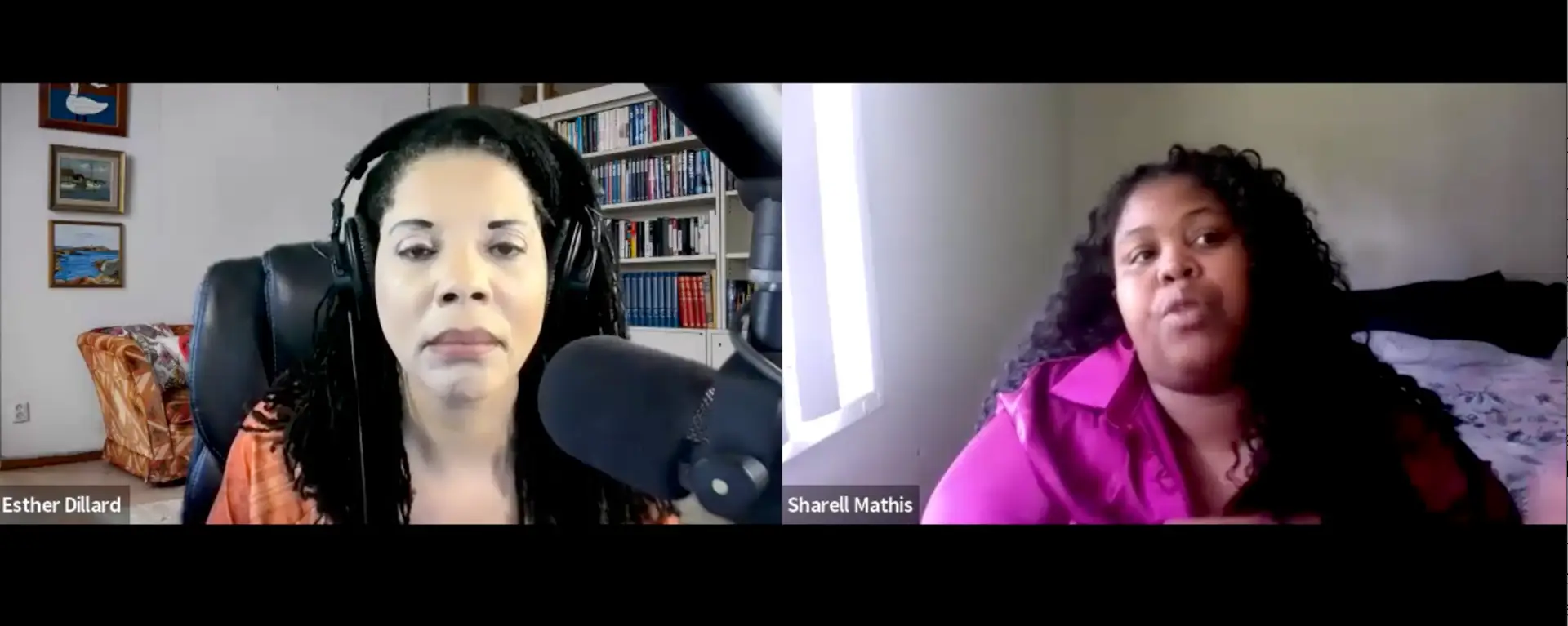
How Sharell Matthis Survived Homelessness With Six Kids
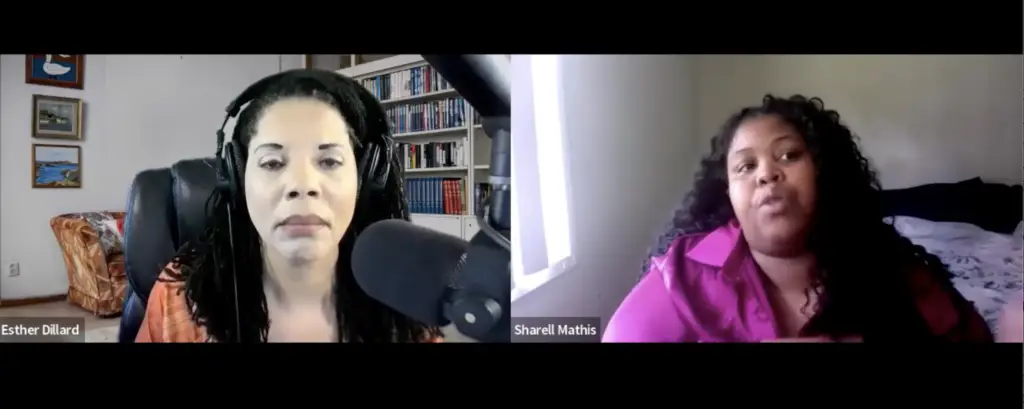
Black family homelessness in America does not always look the way most people picture it. Sharell Matthis had a home, a husband, six children, and a life she had built piece by piece. And then one morning, the pieces stopped holding together.
Sharell Matthis did not choose homelessness. It chose her — through mental illness, addiction, incarceration, and an eviction notice that arrived before she had anywhere else to go. What happened next is the story at the heart of Part Three of Unhoused and Unheard: The Black Experience of Homelessness, now available on The Color Between the Lines.
And it is one of the most difficult episodes I have ever recorded. Not because of the facts — but because of how close those facts hit home.
The Hidden Face of Black Family Homelessness
When most people picture homelessness, they do not picture Sharell Matthis. They do not picture a mother who had a beautiful home, a two-parent household, and a plan. They do not picture someone who went and got a job — while homeless — at a grocery store across the street from where her children were sleeping, because she needed to keep them in sight.
But that is exactly who Sharell is. And her story is not the exception.
According to the HUD 2024 Annual Homelessness Assessment Report, families with children are now the fastest-growing group experiencing homelessness in America — up 39 percent in a single year. Black Americans make up 12 percent of the U.S. population but account for nearly 32 percent of everyone experiencing homelessness in this country. That gap does not close on its own. And Sharell Matthis lived inside it — for nearly two years — before she found a way through.
“What’s Next Mommy?”
There is a moment in my conversation with Sharell that I keep returning to. She was describing what it felt like to raise six children through that level of uncertainty — moving from Pennsylvania to Maryland, from transitional housing to a hotel, from a hotel to sleeping in a vehicle, and then back to a hotel again because it was the only option left.
She said her children would ask her — constantly — “What’s next, mommy? What’s going to happen next?”
And she did not always have an answer.
What she told me next is something I was not prepared for. She said that even after her family was finally housed — stable, safe, in their own space — her children still carried the anxiety of that instability. She called it a sort of PTSD. They still woke up wondering if it was going to change. They still could not fully trust that the floor under them was solid.
That is a cost of Black family homelessness that does not appear in any federal report. It is a mental health crisis that travels with children long after the housing crisis is resolved. And it is something that practitioners — teachers, counselors, social workers — will likely see more and more as the numbers of families experiencing homelessness continue to rise.
The Hotel Math Nobody Talks About
One of the things Sharell described that made me uncomfortable was the reality of paying for a hotel room as emergency housing. When permanent housing is unavailable or inaccessible, families in crisis often end up in motels. It feels like a temporary fix. The numbers tell a different story.
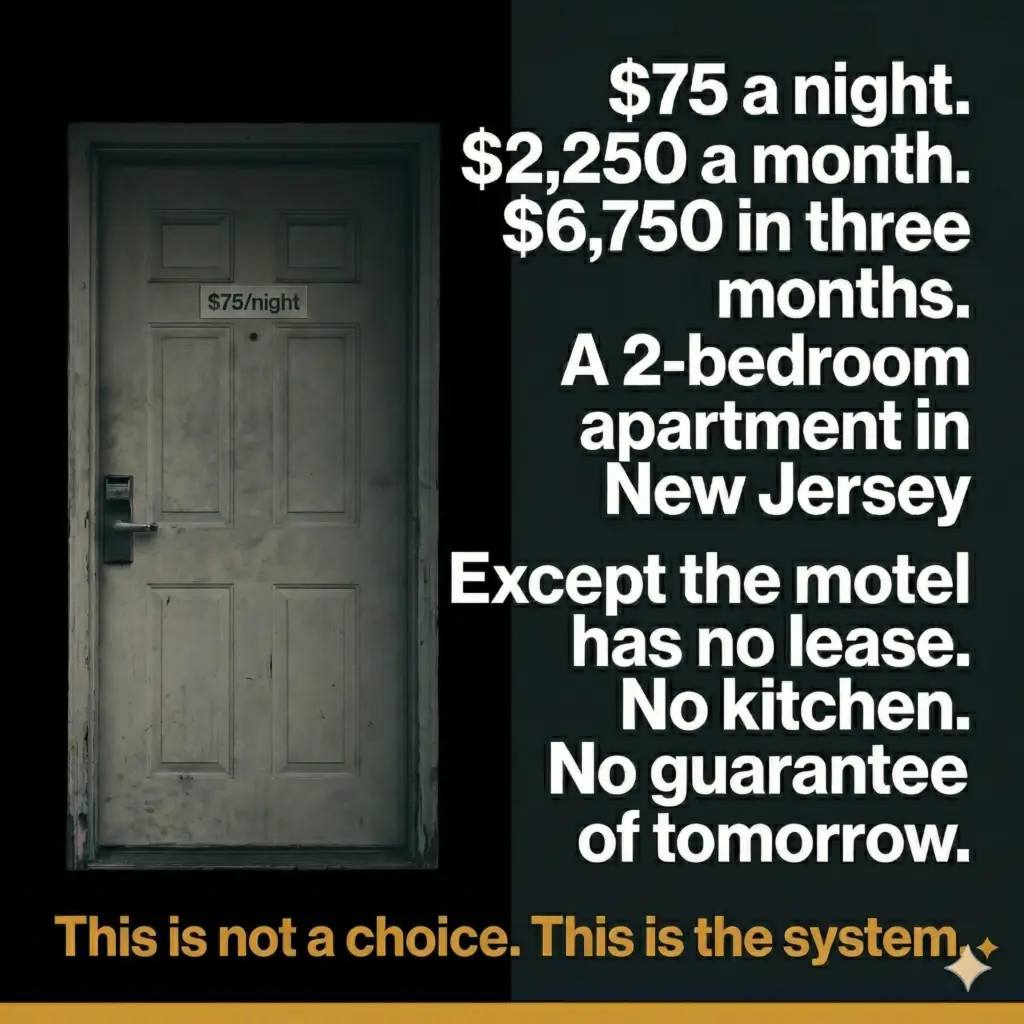
A budget motel in New Jersey — where members of my own family have navigated housing instability — can cost $75 a night or more. That adds up to $525 a week. $2,250 a month. $6,750 over three months.
According to current 2025 market data from RentHop, the average rent for a two-bedroom apartment in New Jersey is approximately $2,500 a month.
The motel costs the same as the apartment. Except the motel has no lease, no kitchen, and no guarantee of tomorrow. And families have to come up with that money every single day — or leave.
Sharell was doing that math with six children depending on her.
What the System Got Right — and What It’s Now Threatening
After nearly two years of moving — Pennsylvania to Maryland, county to county, program to program — Sharell was connected to a program that provided the perfect spot for her.
She told me she had heard promises like that before. But this time it was real. The program provided a furnished unit — no worrying about where the beds were coming from. They provided clothing, food, mental health support, and consistent case management. And four years later, Sharell Matthis is still there, stable and raising her children — and watching the programs that saved her family come under threat.
“A lot of the agencies that provide services for a woman such as myself — with children — funding is being threatened to be cut,” she told me. “These things are a little scary.”
Donald Whitehead, Executive Director of the National Coalition for the Homeless, says those fears are well-founded. He told me that proposed term limits on housing assistance could affect not just people currently experiencing homelessness — but people who are already housed and still relying on that support to stay stable. One estimate he cited suggested that 2.7 million more people could be pushed into homelessness if those cuts move forward.
Why This Episode Was Personal
I want to be honest with you about why this episode was hard to make — and why I made it anyway.
Someone close to me is navigating a version of what Sharell survived. She has children. She has been struggling to find employment. And she is trying to hold everything together in a state where the services are not always there when you need them. Watching that from the outside is one of the hardest things I have experienced as a family member.
This series did not start as a journalistic assignment. It started as a question I could not stop asking — why does Black family homelessness keep happening to people who are doing everything right? And why does it keep happening to us?
The answer, as Donald Whitehead has said throughout this series, is not a moral failure. It is a structural one.
A Message to Every Woman Still Fighting
At the end of my conversation with Sharell, I asked her what she would say to a woman who was exactly where she had been — exhausted, scared, not sure where tomorrow leads.
She did not hesitate.
“Don’t give up. Just keep pressing. Just keep knowing that tomorrow is a new day. I did this with six children. And when I say it gets better — I mean literally what I’m saying. It does get better.”
I believe her. Because I watched her say it. And I could see in her face that she earned every word.
Watch or Listen Now
▶️ Watch Part Three of Unhoused and Unheard: The Black Experience of Homelessness on YouTube
Part Three is available now on The Color Between the Lines —
on the ALIVE Podcast Network, iHeartRadio, Apple Podcasts,
Spotify, and wherever you listen to podcasts.
Also in this series:
- Part One — Adaora Onuora: When the Safety Net Has Holes Adaora Onuora aged out of foster care without knowing resources existed for her — until a case worker changed the course of her life.
- Part Two — Donald Gardner: He Worked His Whole Life Donald Gardner spent decades building a career. A pandemic, a loss, and a series of events left this retired senior experiencing homelessness — while still going to work every day.
If this story moves you — share it. And if you or someone you know needs help finding resources, visit nationalhomeless.org.
📥 Know someone who needs help finding housing resources? Download this free guide and share it with them. No email required. No signup. Just download and pass it on.