
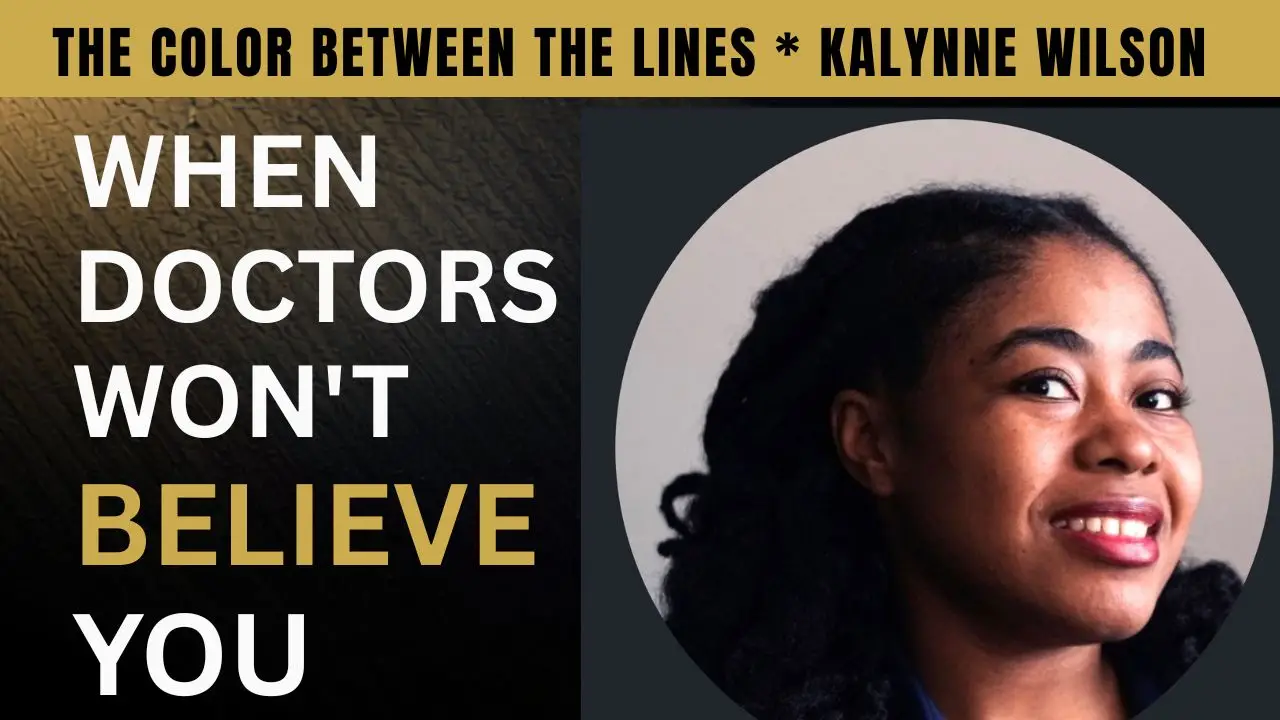
Living With Sickle Cell: What Kalynne Wilson Wants You to Understand
One in 365 Black births in the United States comes with a sickle cell diagnosis. According to the CDC, sickle cell disease affects an estimated 100,000 Americans, and more than 90 percent are Black — yet most people who don’t have the disease couldn’t describe what living with sickle cell actually feels like day to day. That gap in understanding is exactly where journalist Esther Dillard begins her latest conversation on The Color Between the Lines, with sickle cell warrior, adult advocate, and documentary filmmaker Kalynne Wilson.
Kalynne has had sickle cell since birth. She has spent her adult life documenting what sickle cell looks like from the inside — including a film following an 11-year-old girl named Ayana who lives with the same disease. In this episode, Kalynne doesn’t just explain the science. She describes what it costs a patient when doctors don’t believe them.
What a Sickle Cell Pain Crisis Actually Feels Like
For anyone living with sickle cell disease, a pain crisis starts the same way — round, flexible red blood cells turn rigid and crescent-shaped. Those sickled cells stick in blood vessels, blocking blood flow and triggering a pain crisis. Kalynne describes it in visceral terms.
| “It’s like glass. Sometimes it’s a hammer. When it’s my arms and legs, it feels like a baseball bat.” |
Her longest crisis lasted about a week — even after a trip to the emergency room. That detail matters, because it sets up the hardest part of this conversation: what happens when doctors don’t believe a patient in that much pain.
Why Adults With Sickle Cell Face Suspicion, Not Sympathy
Kalynne points to a documented and painful double standard. A child in a sickle cell crisis draws sympathy — medical staff and bystanders see a suffering child and respond with care. A grown adult in the exact same crisis often draws suspicion instead — staff sometimes assume drug-seeking behavior instead of recognizing genuine pain.
| A child in crisis draws sympathy. An adult in the same crisis often draws suspicion. |
It’s a theme that echoes an earlier conversation on this show with Dr. Pierre Johnson on Black women’s health and medical bias — different disease, same underlying question: who doctors believe when they say they’re in pain, and who they don’t.
The Hardest Transition: From Pediatric to Adult Care
Kalynne says living with sickle cell disease means the hardest transition often isn’t medical, it’s the shift from pediatric to adult care. A pediatric care team tends to guide and inform treatment closely, holding a patient’s full history. Adult care means a much wider, less personal pool of providers — and a patient who now has to self-advocate and explain their case, sometimes from scratch, in the middle of a crisis.
Why She Chose a Documentary, Not a Campaign
When it came time to raise awareness, Kalynne didn’t launch a fundraiser or a social media campaign. She made a documentary, “How the Sickle Shapes,” following Ayana — an 11-year-old girl living with sickle cell. Kalynne wanted to show both the medical reality of the disease and the childhood Ayana was still trying to have.
The episode closes on a related, practical note: Kalynne’s connection to Shine the Light on Sickle Cell and the organization’s annual blood drive held every June 19, World Sickle Cell Awareness Day. Because certain antibodies are more common within specific ancestries, blood from Black donors is more likely to be a safe match for Black sickle cell patients — meaning a single donation can help save up to three lives. Living with sickle cell disease doesn’t end when the pain crisis does — it’s Kalynne’s daily reality, and it’s why she turned her story into a documentary.
| BRING THIS CONVERSATION INTO YOUR CLASSROOM Download the free discussion guide, gated for Substack subscribers at substack.com/@iamestherdillard. Want the full lesson? Get the complete $14 educator bundle — guide plus classroom slides — at etsy.com/shop/ColorBtwLinesMarket. |
Watch the Full Episode
Watch and Learn More
Kalynne Wilson’s documentary, “How the Sickle Shapes” (Ayana’s story):
Click the title to learn more about the Shine the Light on Sickle Cell Foundation
CDC — Sickle Cell Disease (data and overview).
Your story matters. — Esther Dillard