
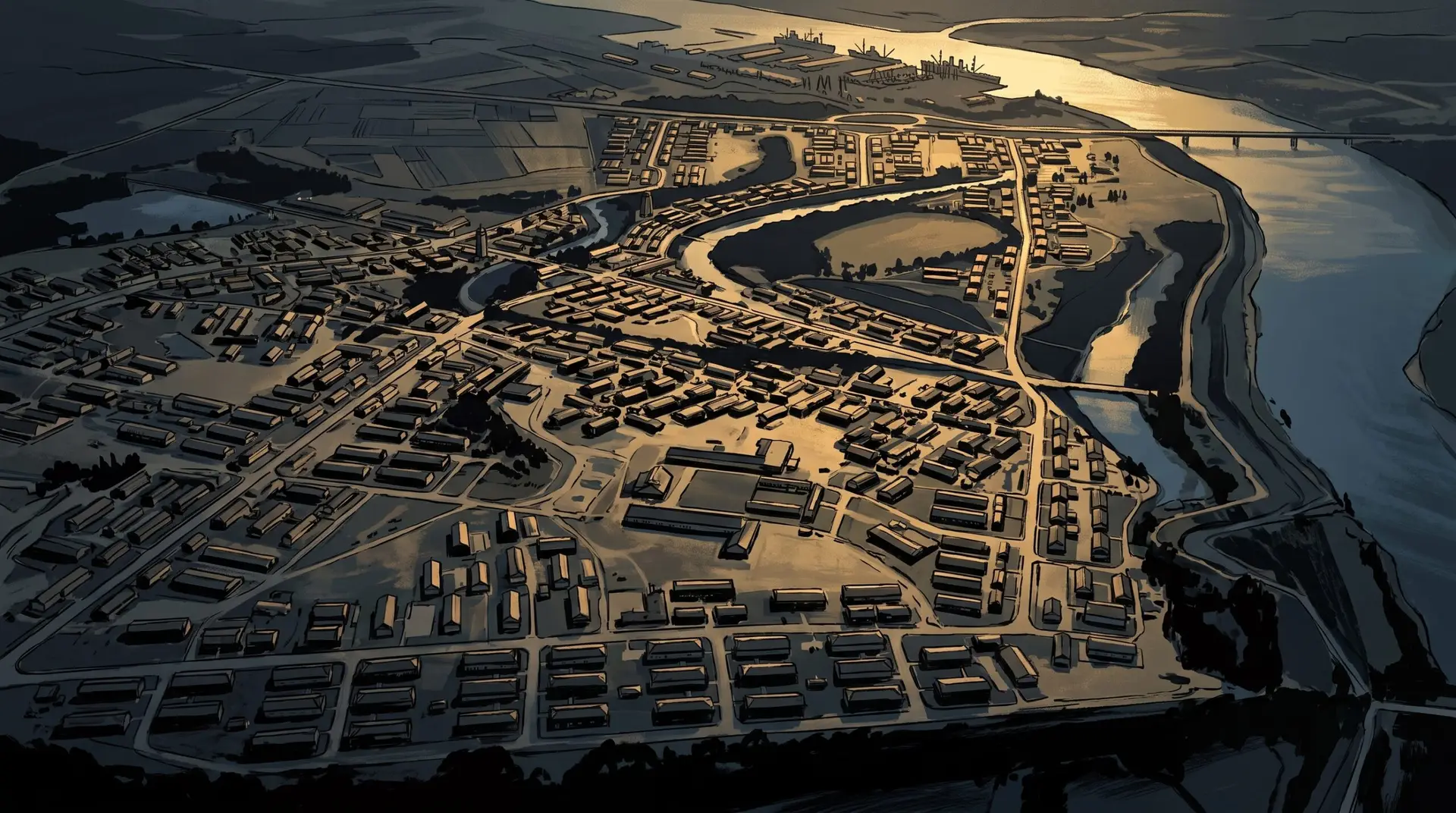
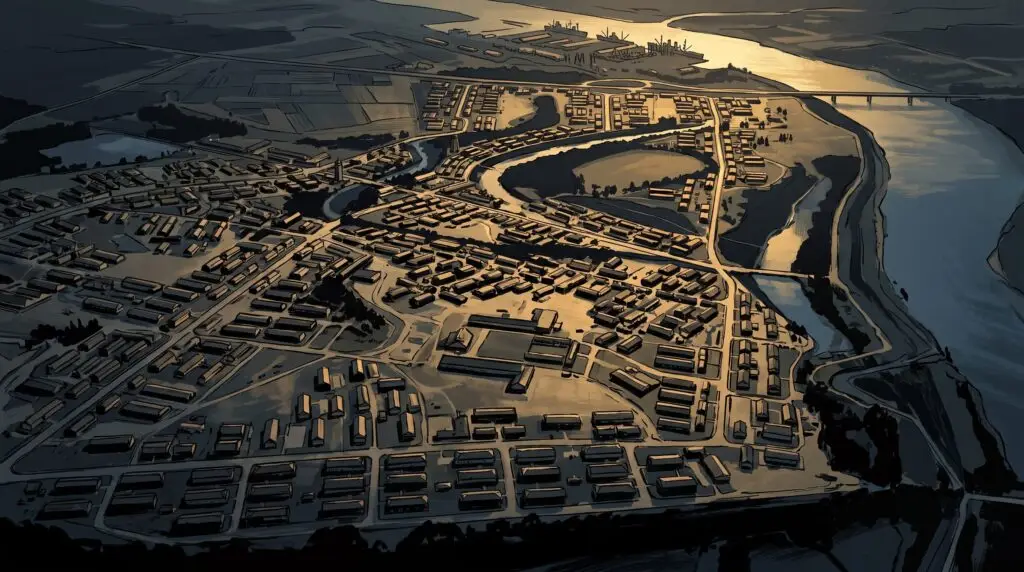
The Vanport, Oregon flood destroyed a city of more than 40,000 people in a single afternoon on May 30, 1948, and most people today have never heard of it. Walk the ground now and you’ll find a public golf course in North Portland — quiet, unremarkable. Eighty years ago that ground held the largest wartime housing project the United States ever built, and briefly one of the most racially integrated communities in the country. This week’s episode of ERASED: The Untold American Story tells the full story — how the city rose in 110 days, and how it disappeared just as fast.
Why ERASED Exists
ERASED: The Untold American Story exists because history textbooks leave gaps, and those gaps aren’t accidents. The series is built for grades 6 through 12 — for classrooms, museums, and cultural institutions that want to teach the American history that got left out, not because it wasn’t important, but because someone decided it was inconvenient. Every episode carries the same message: your story matters, and the people who lived it deserve to be remembered accurately.
Vanport made the list because it surprised me. I was digging for Black history stories most people don’t know, and I kept circling back to Oregon — a state whose founding constitution barred free Black people from living there, the only state ever admitted to the union with that language written in. I’d met a prominent Black person who grew up in Portland and never knew her own city carried that history. That’s the gap ERASED is built to close: stories people write off as too old to matter, when they’re still creating ripple effects today.
A City Built in 110 Days, and the Line No One Could See
When World War II created an urgent need for shipbuilders, industrialist Henry Kaiser built Vanport in 110 days — 10,000 housing units on a floodplain along the Columbia River. Thousands of Black workers migrated there for wages Oregon’s own laws had spent a century keeping out of reach. Inside Vanport they built a real community: nurseries, a theater, a hospital, and in 1946, a college for returning veterans, including Black soldiers who’d fought for a country that denied them basic rights. That college still exists — today it’s Portland State University.
But integration in Vanport didn’t mean equality. Beatrice Gilmore was 13 when her family arrived from Louisiana, and the episode recounts how she found Portland’s racism harder to read than the open hostility she’d left behind — you didn’t know a business would turn you away until you were already inside. Ed Washington was seven when his family arrived from Birmingham, Alabama, expecting integrated schools. Instead, he faced more racist incidents in Vanport than in the segregated South, because in Portland the lines were never clearly drawn. You had to find them yourself.
“No free Black person was legally allowed to live here. It’s the only state ever admitted with that language in its founding document.” — ERASED: How Vanport Disappeared
The Afternoon the Vanport, Oregon Flood Hit
Vanport was always meant to be temporary — the housing authority’s own charter called for most of it to eventually come down. When the war ended, white residents left freely. Black residents, blocked by discriminatory housing policy across the rest of Portland, mostly could not.
On the morning of May 30, 1948 — Memorial Day — the Housing Authority printed a flyer for every doorway: “Dikes are safe at present. You will be warned. If necessary, you will have time to leave. Don’t get excited.” At 4:17 that afternoon, the railroad dike collapsed. A wall of water tore through the city. Fifteen people died. Thousands lost everything they owned. Vanport was never rebuilt.
Displaced families were forced into Albina, Portland’s only other neighborhood open to them — already overcrowded before the water hit. A Portland State University historian put it plainly, as cited in the episode:
“The flood did not solve Portland’s housing problem. It swept it in the final phase of what she called ghetto building.” — cited in ERASED: How Vanport Disappeared
Where You Can Still Visit the Vanport, Oregon Flood Site
The land where the Vanport, Oregon flood happened sat empty for almost two decades before Portland built a golf course over it. But the history didn’t disappear — it just got harder to find.
In 2021 — 73 years after the flood — the Housing Authority’s successor agency issued its first public acknowledgment of wrongdoing. That’s not ancient history. That’s inside a lot of living memory.
Why This One Stayed With Me
This is one story. There are hundreds more like it still waiting to be taught, and that’s the whole premise behind ERASED. The people who lived through Vanport didn’t get to choose whether their city would be remembered. We do.
“History stays erased only if we let it.” — ERASED: How Vanport Disappeared
Watch the Full Episode
Watch “ERASED: How Vanport Disappeared” on YouTube
Learn More
Oregon Encyclopedia — Vanport history is at the link.
The Vanport Mosaic — Tours and exhibits at the Historic Alberta House
Portland State University — Founding history and the Vanport Extension Center
Related reading on this site: Many don’t know that Harriett Tubman was a military leader whose efforts were not recognized until decades later.
Bring This Episode Into Your Classroom
The full ERASED educator lesson plan for this episode is live now on Etsy for $27 — “Vanport Oregon Black History Lesson Plan | ERASED Educator Guide Grades 6-12 | 1948 Flood Discussion Guide”
(This listing includes the 12-page PDF lesson plan only — no companion slide deck for this episode.)
A free discussion guide is also available on Esther Dillard’s Substack.
Your story matters. — Esther Dillard